CPR vs Defibrillator: What’s the Difference and When Should You Use Them?
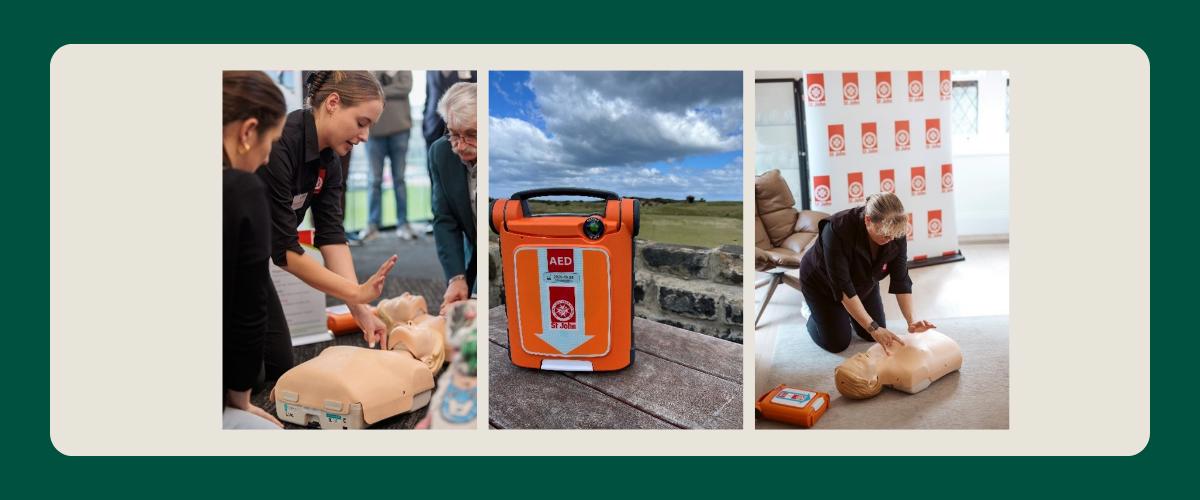
When someone collapses from a sudden cardiac arrest, every second matters. Yet many Victorians, and 46% of Australians overall, feel unprepared to administer first aid and are unsure about what to do, or believe that CPR is too complicated, too risky, or only for medical professionals. However, it’s a skill everyone should know.
Understanding the difference between and purpose of CPR (Cardiopulmonary Resuscitation) and a defibrillator (AED – Automated External Defibrillator) could mean the difference between life and death. And the truth is: both are designed to be used by everyday people and should be used together for the best results.
The Reality of Cardiac Arrest in Victoria
Cardiac arrest can happen to anyone, anywhere: at work, at a sporting event, at home, or in a shopping centre.
- Around 7,000 Victorians suffer an out-of-hospital cardiac arrest each year.
- The majority occur usually at home, and sadly, only 5% survive.
- Survival rates significantly increase, to as high as 70%, when bystanders intervene early with CPR and defibrillation.
- Every minute without defibrillation reduces survival chances by approximately 10%.
Ambulance response times are critical, but bystanders are often the true first responders.
What is CPR?
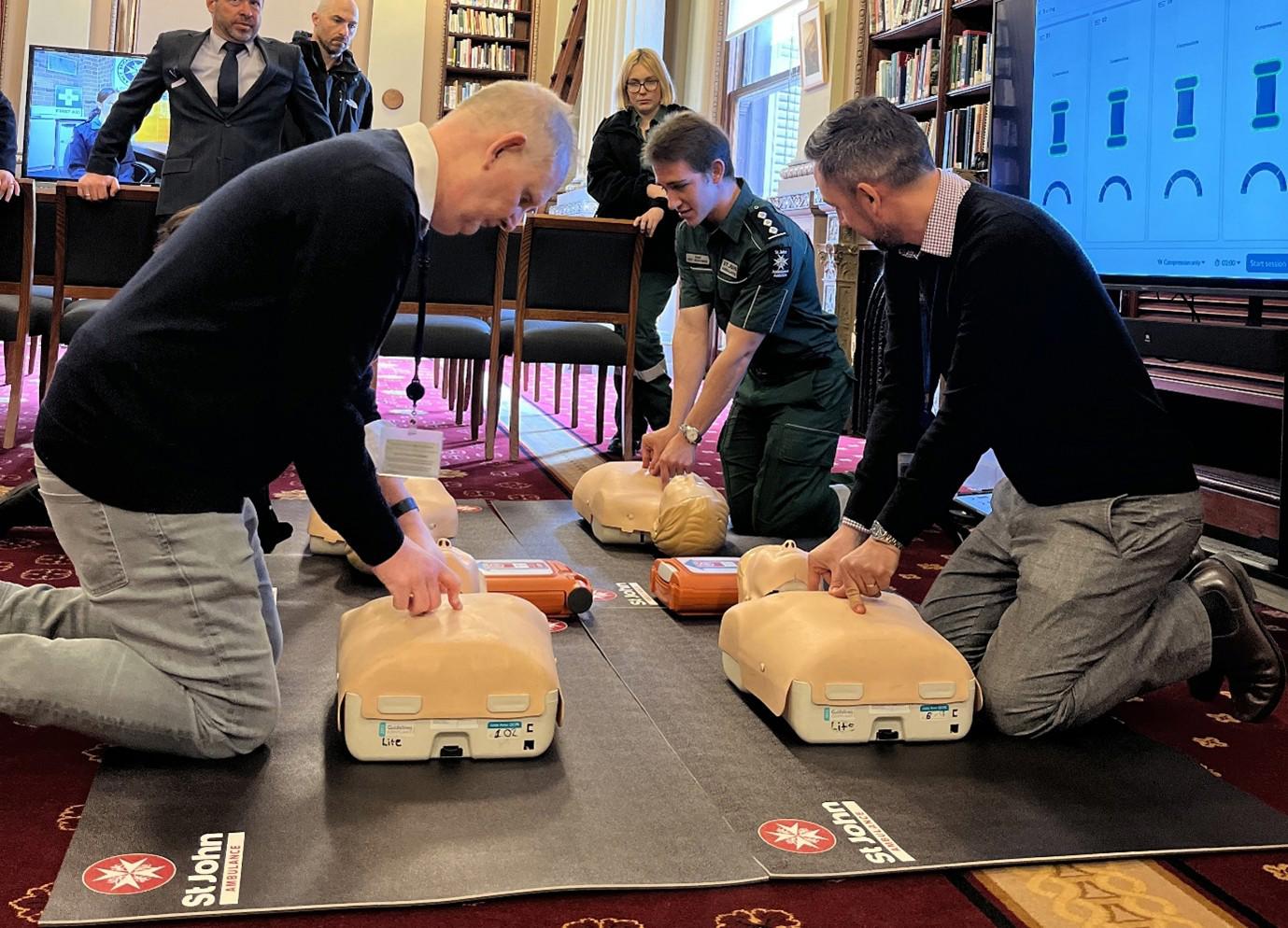
CPR stands for Cardiopulmonary Resuscitation.
It is a lifesaving technique that keeps blood and oxygen circulating to vital organs when a person’s heart has stopped beating effectively.
What CPR Does:
- Manually pumps blood around the body through chest compressions
- Keeps oxygen flowing to the brain and heart
- Buys time until a defibrillator or emergency services arrive
Breaking the Myths About CPR
Myth 1: CPR is complicated.
Reality: Hands-only CPR is simple. Push hard and fast in the centre of the chest at a rate of about 100–120 compressions per minute.
Myth 2: You need formal training to help.
Reality: Training builds confidence, but even for those who haven’t completed formal training doing something is better than doing nothing in an emergency. Emergency call-takers can guide you through it.
Myth 3: You might hurt someone.
Reality: If someone is in cardiac arrest, not breathing or responding, the person is not able to recover on their own. The only harm is not acting.
Myth 4: CPR alone will restart the heart.
Reality: CPR keeps blood flowing, but it does not restart the heart. That’s where a defibrillator comes in.
What is a Defibrillator?
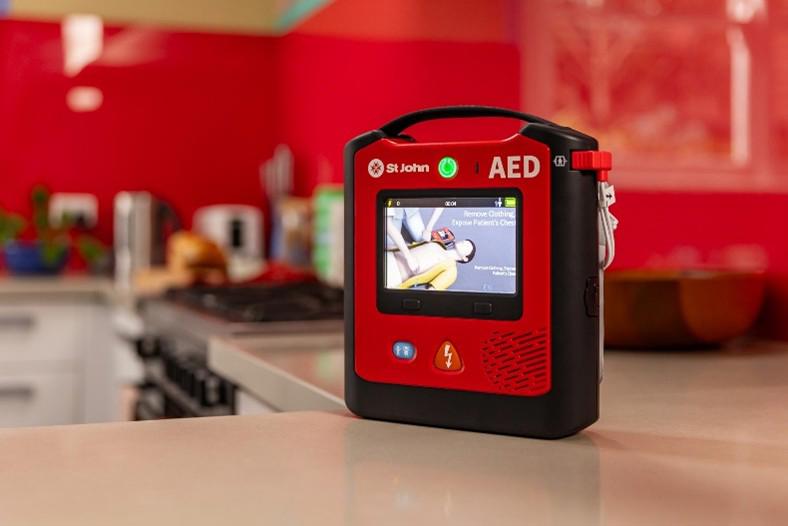
A defibrillator (AED) is a device that delivers an electrical shock to the heart when it detects a life-threatening abnormal rhythm.
It does not shock unless it is needed.
What a Defibrillator Does:
- Analyses the heart rhythm automatically
- Determines if a shock is required
- Delivers a shock to help restore a normal rhythm
- Provides clear voice (and in modern models, visual) instructions, as well as CPR guidance
Defibrillators are designed for public use. You do not need medical training to operate one.
Can CPR and a Defibrillator Be Used Together?
Yes - and they should be.
Here’s how they work together:
- Call 000
- Start CPR immediately, this keeps the heart in a state of ‘fibrillation’ so that it can receive a shock from an AED
- Send someone to retrieve a defibrillator
- Turn on the defibrillator and follow its instructions
- Continue CPR between shocks until help arrives
CPR keeps oxygen moving, defibrillation restarts the heart and together, they dramatically increase survival rates.
When Should You Use a Defibrillator?
Get a defibrillator when someone:
- Is unresponsive, and
- Is not breathing normally (or not breathing at all)
Turn the device on and follow the prompts. It will guide you step by step.
Modern defibrillators will:
- Analyse heart rhythm
- Only deliver a shock if required
An AED cannot accidentally shock someone whose heart doesn’t need it.
Why Confidence Matters
One of the biggest barriers to action is fear; fear of doing it wrong, of hurting someone, or of legal consequences.
In Victoria, Good Samaritan protections exist for people who provide emergency assistance in good faith. The law supports those who step forward to help.
The most important thing in cardiac arrest is immediate action.
Meet the Next Generation: The St John X3 Defibrillator
Because lifesaving technology should be accessible, reliable, and intuitive, St John Ambulance Victoria now offers the St John X3 Defibrillator, built for real-world emergencies.
Premium Technology. Emergency Readiness.
Why the St John X3 Stands Out:
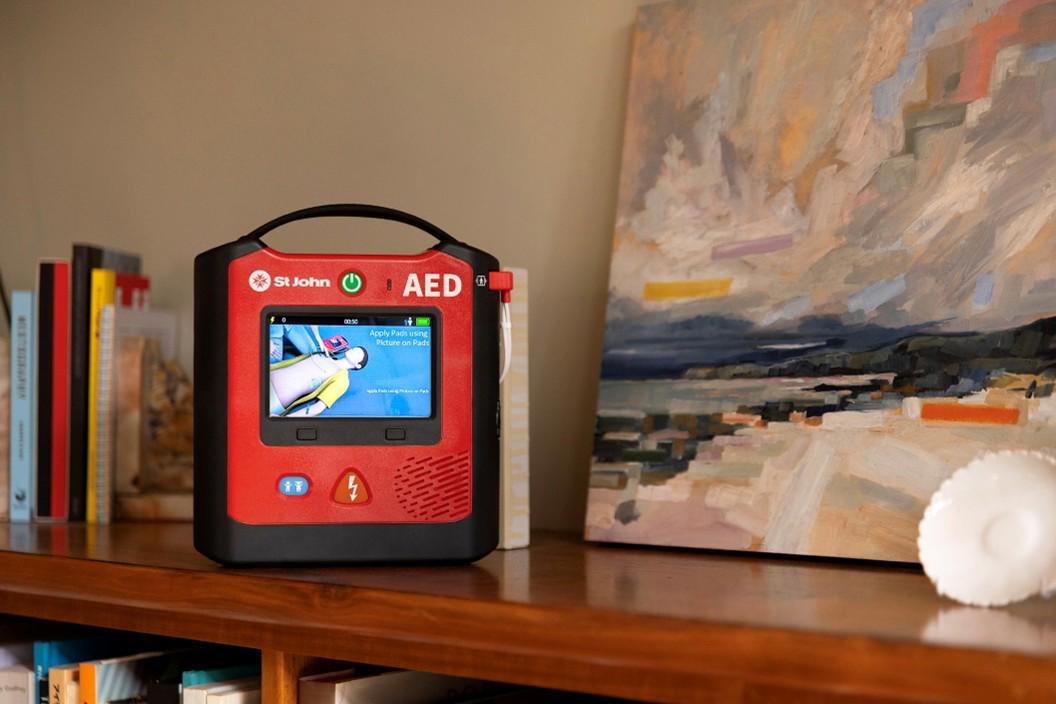
Video & Audio Guidance
A built-in video screen provides step-by-step visual prompts alongside clear voice instructions, ideal for high-stress situations.
Adult & Child Mode
Switch to child mode with the press of a button, no separate pads required.
Intelligent Heart Rhythm Analysis
Automatically determines if a shock is needed, preventing unnecessary shocks.
Fast Response
Just 7 seconds to shock delivery.
Daily Self-Testing
Runs automatic diagnostic checks every day, so it’s always ready.
Automatic ECG Recording
Captures real-time ECG data during an incident.
IP55 Protection Rating
Dust and water-resistant, suitable for workplaces, public areas and outdoor environments.
Rugged & Reliable
Drop-tested from 1.5 metres and built for demanding conditions.
Heavy-Duty Performance
Up to 200 shocks.
Because saving lives shouldn’t be complicated.
Education + Equipment = Stronger Communities
Having a defibrillator on-site is critical and knowing how to use it is even more powerful.
At St John Ambulance Victoria, we equip workplaces, schools, sporting clubs and community organisations with:
- Accredited CPR and First Aid training
- Defibrillators and cabinets
- Ongoing compliance support, including checking and replacing pads and batteries if needed
Cardiac arrest doesn’t wait; preparedness shouldn’t either.

How to Choose a Defibrillator – 22 Life Saving Features Compared
When it comes to saving a life during a cardiac arrest every minute counts.

What is the Chain of Survival
If the words Sudden Cardiac Arrest (SCA) stir up fear in you then you’re not alone.

Every Second Counts: How 40 Minutes of CPR Saved Andrew’s Life
What began as a normal day on the golf course for Andrew Rogers and his son-in-law Peter Petricola turned into a fight for life.