Stroke First Aid: Recognise the Signs and Act F.A.S.T.
A stroke can happen to anyone, anywhere, at any age. It may strike a colleague at work, a loved one at home, or a stranger in the supermarket. What happens in the first few minutes can make a significant difference to that person's recovery and future quality of life.
This National Stroke Week, St John Ambulance Victoria is encouraging all Victorians to learn the signs of stroke and know what to do in an emergency.
What is a stroke?
A stroke occurs when blood flow to part of the brain is interrupted, either by a blockage or a burst blood vessel. Without oxygen-rich blood, brain cells begin to die within minutes.
Stroke is one of Australia's leading causes of death and disability, affecting thousands of Australians every year. Recent data shows a stroke occurs approximately every 11 minutes in Australia.
That's why stroke is always a medical emergency.
Time matters
When someone is having a stroke, every second counts.
According to Stroke Foundation data, up to 1.9 million brain cells can be lost every minute that a stroke goes untreated. The sooner emergency treatment begins, the greater the chance of survival and recovery.
Many people hesitate, hoping symptoms will pass or improve. Unfortunately, delays can result in greater brain damage and increased disability.
If you think someone may be having a stroke, don't wait. Call Triple Zero (000) immediately.
Remember F.A.S.T.
The easiest way to recognise the most common signs of stroke is the F.A.S.T. test. The Stroke Foundation recommends this simple acronym to help Australians identify a possible stroke quickly.
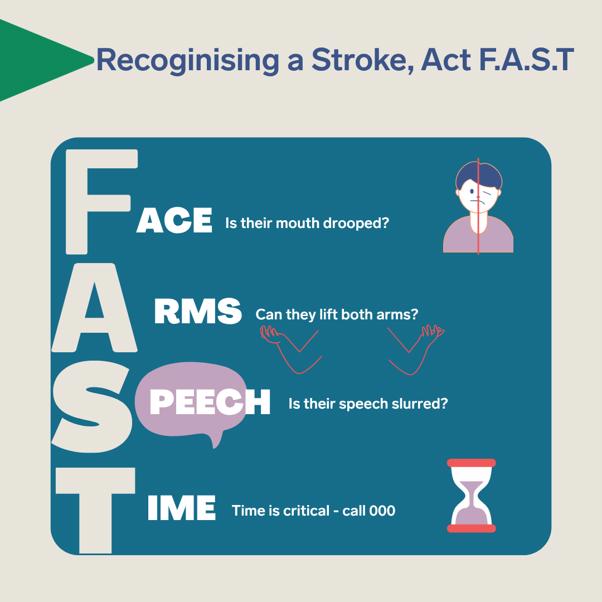
F - Face
Ask the person to smile.
Has one side of their face drooped?
A - Arms
Can they lift both arms?
Does one arm drift down or feel weak?
S - Speech
Is their speech slurred or difficult to understand?
Can they repeat a simple sentence?
T - Time
If you notice any of these signs, call Triple Zero (000) immediately.
Do not drive the person to hospital yourself. Paramedics can begin assessment and provide critical care on the way to hospital.
Other signs of stroke
While F.A.S.T. helps identify the most common symptoms, strokes can present in other ways too.
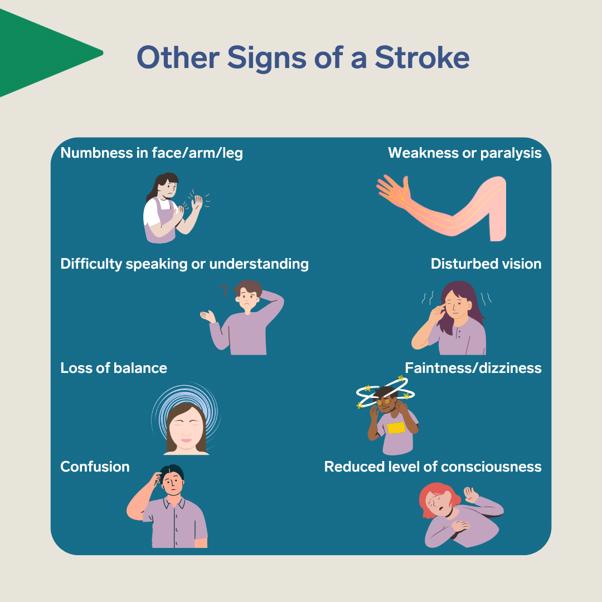
Watch for sudden:
- Weakness, numbness or paralysis, particularly on one side of the body
- Loss of balance, coordination or an unexplained fall
- Dizziness
- Vision changes or loss of vision
- Difficulty understanding others
- Severe, unexplained headache
- Difficulty swallowing
Even if symptoms disappear after a few minutes, seek emergency medical attention immediately. A temporary episode may be a transient ischaemic attack (TIA), often called a "mini stroke", which can be an important warning sign of a future stroke.
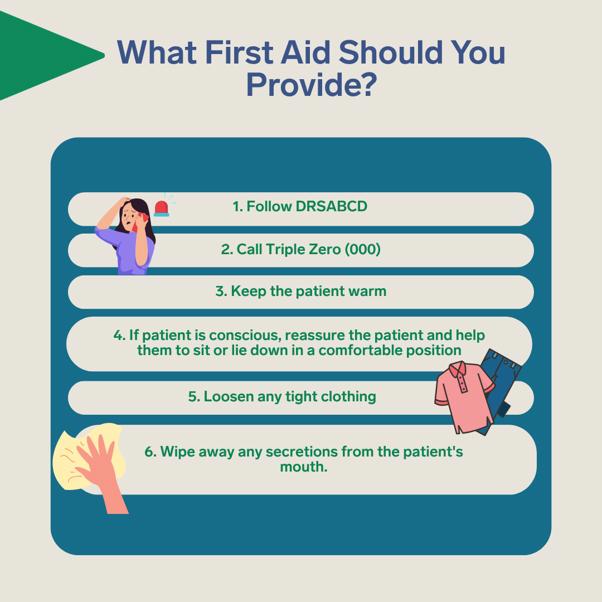
What should you do if someone is having a stroke?
If you suspect a stroke:
Stroke doesn't discriminate
There's a common misconception that stroke only affects older people.
While age can increase the risk, strokes can occur at any age. In fact, Stroke Foundation reports that around one in four strokes affects Australians of working age.
Knowing the signs could help you recognise a stroke in a friend, family member, colleague or community member when they need help most.
Be a F.A.S.T. Hero this National Stroke Week
The theme of National Stroke Week 2026 is "When stroke strikes, be a F.A.S.T. hero." The campaign recognises everyday Australians who identified the signs of stroke and acted quickly by calling an ambulance.
You don't need medical training to make a difference.
By learning the signs, trusting your instincts and calling Triple Zero (000) without delay, you could help save a life and improve someone's chance of recovery.
This National Stroke Week, take a moment to learn F.A.S.T., share it with your family and friends, and help build a community that's ready to act when every second counts.
Think F.A.S.T.. Act F.A.S.T.. Call 000.
Bitesize eLearning Course: Chest Pain and Stroke
Knowing the difference between chest pain and a stroke may not only save your life, it may also save the life of another.

How to Stay Calm in an Emergency Situation
Whether it’s a stranger, a colleague or a loved one facing an emergency medical situation, it can be a highly stressful and traumatic event.

First Aid Essentials: A complete guide
This eLearning course covers all the essential topics we teach in first aid.